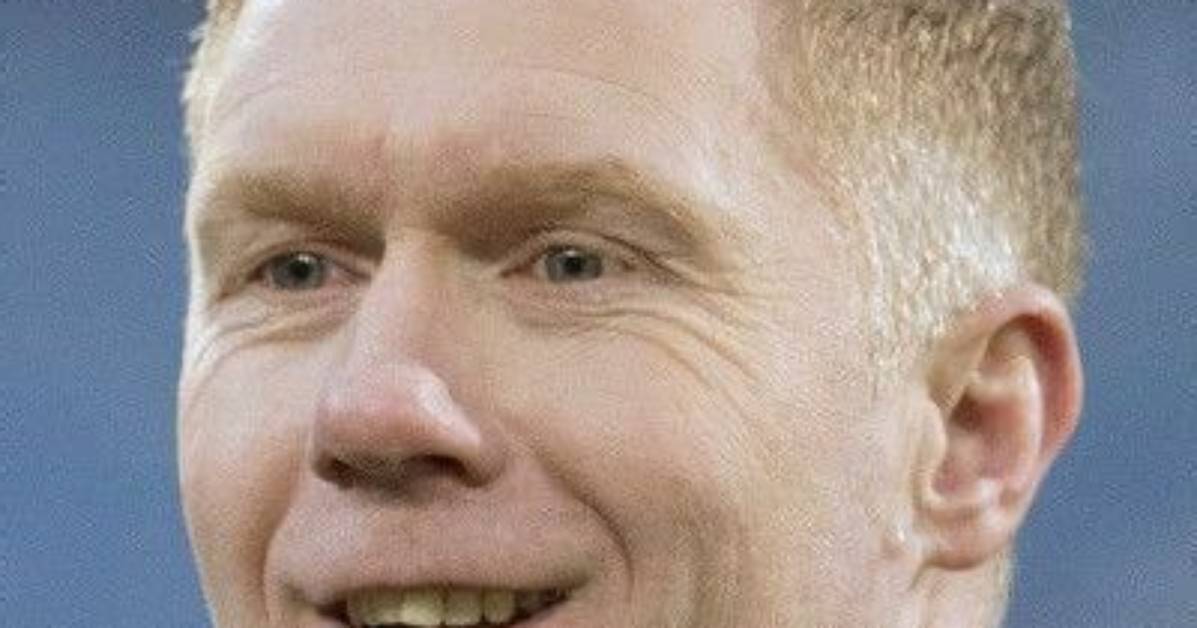
Exploring the core elements of Paul Scholes Net Worth, Age, Height, Bio, Birthday, Wiki—check out the essential highlights.
Paul Scholes is one of the richest Soccer Player from United Kingdom. According to our analysis, Wikipedia, Forbes & Business Insider, Paul Scholes's net worth $25 Million. (Last Update: December 11, 2023)
He was a part of Manchester United’s youth team. Manchester United youth team when the age of 14 was when he joined the Manchester United youth team.
He was awarded the league with 11 Premier League titles and 3 FA Cups while playing for Manchester United.
Paul Scholes (/s k oʊ l z / SKOHLZ ; born 16 November 1974) is an English football coach and former player, as well as a co-owner of Salford City. He spent his entire professional playing career with Manchester United, for whom he scored over 150 goals in more than 700 appearances between 1993 and 2013. His first managerial position was at Oldham Athletic, for 31 days in February and March 2019.
Scholes came through the Manchester United youth academy as one of Fergie’s Fledglings (a group of players recruited by Manchester United under the management of Sir Alex Ferguson). Scholes made his full debut for Manchester United in the 1994–95 season. He went on to make 718 appearances for United, the third-highest number of appearances by any player for the club. Scholes announced his retirement from playing in May 2011 and was appointed as a coach at Manchester United. However, he returned to playing in January 2012, and went on to play one more season for the club before retiring again in May 2013. With United, Scholes won 25 trophies including 11 Premier League titles (more than any other English player) and two UEFA Champions League titles.
In 1995–96, after Mark Hughes moved to Chelsea, Scholes had more first-team opportunities, standing in for the suspended Eric Cantona as Andrew Cole’s strike partner for the first two months of the campaign. Scholes scored 14 goals in all competitions as United became the first English team to win the double twice. He picked up another Premier League winners medal in 1996–97 – in this season he changed his shirt number to 18, which he held for the next 15 years.