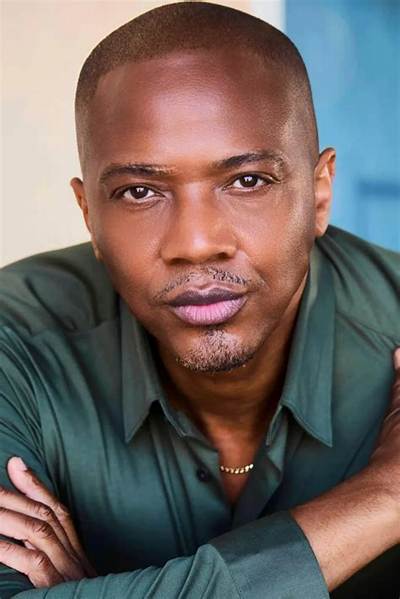
Patrice Roberts height Not available right now. Patrice weight Not Known & body measurements will update soon.
 James H. Sterling
Patrice Roberts Net Worth, Age, Height, Bio, Birthday, Wiki!

| Height | Unknown |
| Weight | Not Known |
| Body Measurements | Under Review |
| Eye Color | Not Available |
| Hair Color | Not Available |
| Feet/Shoe Size | Not Available |
It was in 2005 when Patrice Roberts shocked the entertainment industry in Trinidad and Tobago with her talent. Her introduction through a vocal collaboration was with Bunji Garlin, who at that time was in the spotlight. It was her refreshingly soothing and powerful vocals that quickly got her the attention that many established entertainers desired. Very few were able to provide accurate answers about her and her career, appearing mystery like. Patrice Roberts has assumed her position in the Caribbean music industry as a force to be reckoned with.
On 1 January 2017 Patrice Roberts released a song called Big Girl Now. In the context of Caribbean and Trinidadian history and Roberts’ role as a female soca artist, the song serves as a modern repudiation of a male dominated culture. Trinidadian culture has historically been male dominated and the same can be said of soca since its inception. Before and after Trinidad’s independence from Britain, the country has kept a strict binary of male and female roles. Men dominated the “rational” public sphere thus laying claim to the spoken word and women were relegated to the private sphere as was much of the rest of the Caribbean. The gendered authority over the spoken word in the Caribbean and Trinidad gives great meaning to women who challenge such notions. In the 1980s, the male dominated field of soca music began to shift as Trinidadian vocal performers began to emerge. Enter Patrice Roberts who was born in 1985 just as women began to dominate soca music. In Big Girl Now, Patrice Roberts brushes past traditional notions of who can and can’t produce soca music and takes back her own sexuality as a grown woman from a society that attempts to tell her what she can and can’t do. Much of gendered Trinidadian society can be traced back to early post-independence. Just after the independence of Trinidad from Britain on 31 August 1962, the country set about creating the imagined community of “nation” and citizenry (state). In this light the creation of cultural borders such as that on sexuality is one of the modern nation-state. For example, the Sexual Offenses Bill of 1986 that attempted to regulate women’s bodies by dictating what was allowed sexually. The bill stated that ” promiscuity” was a “contaminant of the West”. Soca music as performed by female soca performers, such as Patrice Roberts in Big Girl Now, can be thought of as a repudiation of the nation-state evident in lyrics such as “mind your business, hush your mouth” while Patrice Roberts and her friends in the music video for Big Girl Now take part in what might be considered “promiscuous behavior” by traditional norms. Some critics of Caribbean music and the soca music scene such as author Kevin Frank believe the role of women to be a solely exploitative and poisonous one while looking at the lyrics of male soca artists and the dance “winning”. These critics fail to take into account contemporary female soca performers and the colonial history of pre-independence Trinidad as well as early post-independence Trinidad. Both periods sought out to control the sexuality of women. According to Susan Harewood, national narratives that make up the conception of “nation” are multi-authored but rarely egalitarian. Throughout Trinidad’s history these narratives have been written by men. Artists and Trinidadian women such as Patrice Roberts are authoring their own narrative of what it means to be a Trinidadian woman.
James H. Sterling
Environmental Science & Climate Journalist
James Sterling reports on renewable energy developments, climate policy, ecological conservation, and green tech innovations around the globe.