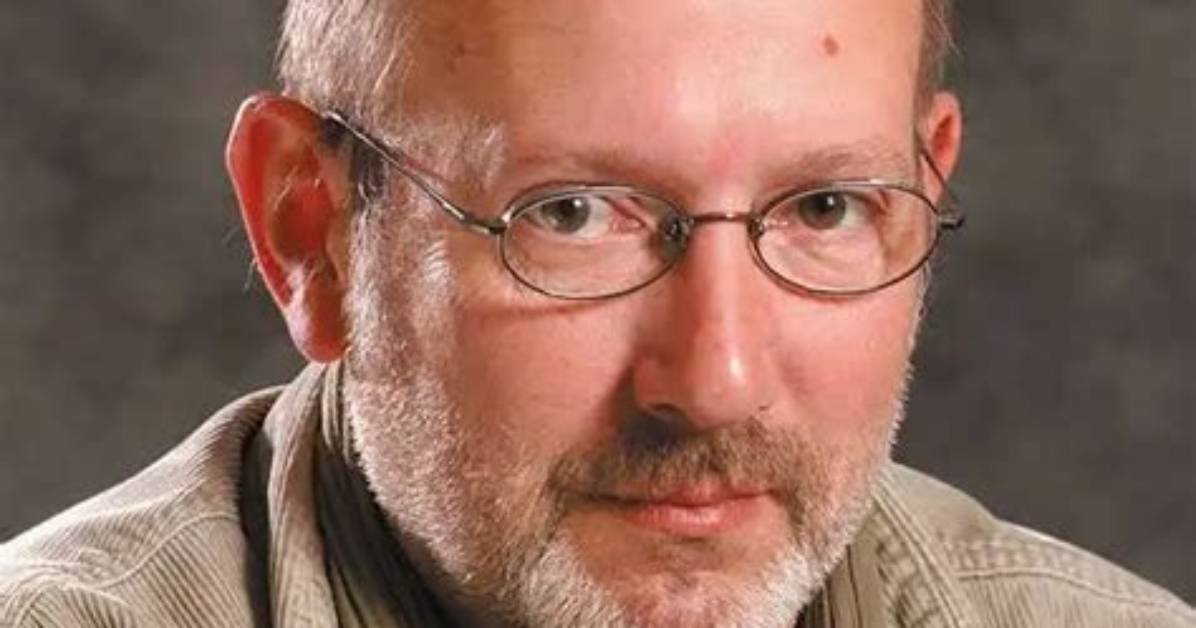
Alan Sokal is one of the most popular and richest Mathematician who was born on January 24, 1955 in Boston, Boston, United States. Alan David Sokal (/ˈ s oʊ k əl / ; born January 24, 1955) is a professor of mathematics at University College London and professor of physics at New York University. He works in statistical mechanics and combinatorics. He is a critic of postmodernism, and caused the Sokal affair in 1996 when his deliberately nonsensical paper was published by Duke University Press’s Social Text. He also works to counter faulty scientific reasoning, as seen with his involvement in criticising the critical positivity ratio concept in positive psychology.
In 1996, Sokal was curious to see whether the then-non-peer-reviewed postmodern cultural studies journal Social Text (published by Duke University Press) would publish a submission which “flattered the editors’ ideological preconceptions”. Sokal submitted a grand-sounding but completely nonsensical paper titled “Transgressing the Boundaries: Toward a Transformative Hermeneutics of Quantum Gravity.”
In 2008, Sokal revisited the Sokal affair and its implications in Beyond the Hoax.
In 2013 Sokal co-authored a paper with Nicholas Brown and Harris Friedman, rejecting the Losada Line, a concept popular in positive psychology. Named after its proposer, Marcial Losada, it refers to a critical range for an individual’s ratio of positive to negative emotions, outside of which the individual will tend to have poorer life and occupational outcomes. This concept of a critical positivity ratio was highly cited and popularised by psychologists such as Barbara Fredrickson. The trio’s paper, published in American Psychologist, contended that the ratio was based on faulty mathematical reasoning and therefore invalid.
After holding the article back from earlier issues due to Sokal’s refusal to consider revisions, the staff published it in the “Science Wars” issue as a relevant contribution. Soon thereafter, Sokal then revealed that the article was a hoax in the journal Lingua Franca, arguing that the left and social science would be better served by intellectual underpinnings based on reason. The affair was front-page news in The New York Times on May 18, 1996. Sokal responded to leftist and postmodernist criticism of the deception by asserting that his motivation was to “defend the Left from a trendy segment of itself”.