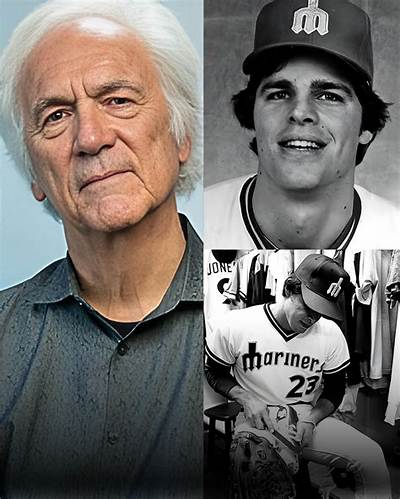
Interested in Chris Hedges Net Worth, Age, Height, Bio, Birthday, Wiki, here is deep analysis you shouldn't miss.
Chris Hedges is one of the richest Journalist from United States. According to our analysis, Wikipedia, Forbes & Business Insider, Chris Hedges's net worth $5 Million. (Last Update: December 11, 2023)
He completed his undergraduate studies in Colgate University, where he was awarded the degree of B.A. in English literature. He completed his graduate work conducted by the Harvard Divinity School.
His 2002 novel, “War is a Force That Gives us Meaning,” was a finalist for the highly coveted National Book Critics Circle Award for Nonfiction.
Christopher Lynn Hedges (born September 18, 1956) is an American journalist, Presbyterian minister, and visiting Princeton University lecturer. His books include War Is a Force That Gives Us Meaning (2002), a finalist for the National Book Critics Circle Award for Nonfiction; Empire of Illusion: The End of Literacy and the Triumph of Spectacle (2009); Death of the Liberal Class (2010); Days of Destruction, Days of Revolt (2012), written with cartoonist Joe Sacco, which was a New York Times best-seller; Wages of Rebellion: The Moral Imperative of Revolt (2015); and his most recent America: The Farewell Tour (2018).
Three of Hedges’ articles were based upon the stories of Iraqi defectors, who had been furnished to Hedges by the Information Collection Program of the U.S.-funded Iraqi National Congress. The program promoted stories to major media outlets in order to orchestrate U.S. intervention in Iraq in the aftermath of the 9/11 attacks. Most significant of his reports in this period was a November 8, 2001, front-page story about two former Iraqi military commanders who claimed to have trained foreign mujahedeen how to hijack planes without using guns. Hedges quoted a man whom he believed to be an Iraqi general: “These Islamic radicals … came from a variety of countries, including Saudi Arabia, Yemen, Algeria, Egypt, and Morocco. We were training these people to attack installations important to the United States”. The two defectors also asserted there was a secret compound in Salman Pak facility where a German scientist was producing biological weapons.
In 2001, Hedges contributed to The New York Times staff entry that received the 2002 Pulitzer Prize for Explanatory Reporting for the paper’s coverage of global terrorism. He also received the Amnesty International Global Award for Human Rights Journalism in 2002. He has taught at Columbia University, New York University, the University of Toronto and Princeton University, where he is a visiting lecturer in African American studies.