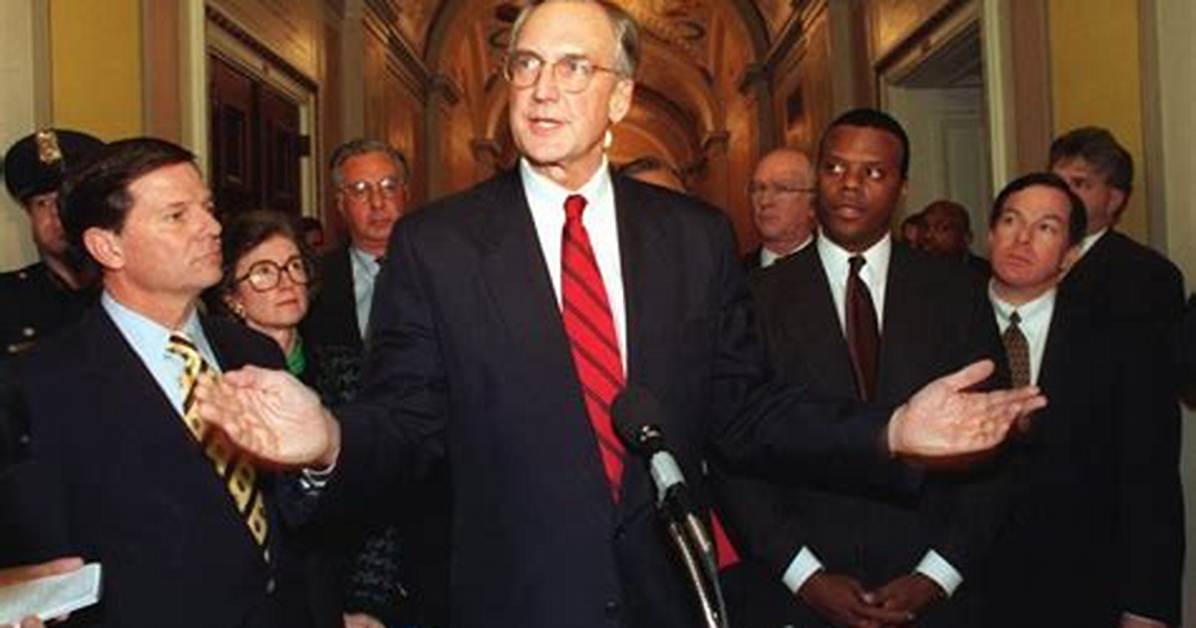
J. C. Watts is one of the most popular and richest Politician who was born on November 18, 1957 in Eufaula, Eufaula, United States. Julius Caesar Watts Jr. (born November 18, 1957) is an American politician, clergyman, and athlete. Watts was a college football quarterback for the Oklahoma Sooners and later played professionally in the Canadian Football League. He served in the U.S. House of Representatives from 1995 to 2003 as a Republican, representing Oklahoma’s 4th Congressional District.
Watts became a Baptist minister and was elected in 1990 to the Oklahoma Corporation Commission as the first African-American in Oklahoma to win statewide office. He successfully ran for Congress in 1994 and was re-elected to three additional terms with increasing vote margins. Watts delivered the Republican response to Bill Clinton’s 1997 State of the Union address and was elected Chair of the House Republican Conference in 1998. He retired in 2003 and turned to lobbying and business work, also occasionally serving as a political commentator.
Watts returned to Oklahoma and became a youth minister in Del City and was ordained as a Baptist minister in 1993. He is a teetotaler. Watts opened a highway construction company and later cited discontent with government regulation of his business as reason to become a candidate for public office. Watts’ family was affiliated with the Democratic Party and his father and uncle Wade Watts were active in the party, but it did not help Watts when he ran for public office and he changed his party affiliation in 1989, months before his first statewide race. Watts later stated he had first considered changing parties when he covered the 1980 U.S. Senate campaign of Republican Don Nickles. Watts’ father and uncle continued to strongly oppose the Republican party, but supported him. Watts won election to the Oklahoma Corporation Commission in November 1990 for a six-year term as the first African-American elected to statewide office in Oklahoma. He served as a member of the Commission from 1990 to 1995 and as its chairman from 1993 to 1995.
Watts ran for Congress in 1994 to succeed Dave McCurdy, who had announced his retirement from the House of Representatives to run for the Senate. He positioned himself as both a fiscal and social conservative, favoring the death penalty, school prayer, a balanced budget amendment and welfare reform, and opposing abortion, gay rights, and reduced defense spending. After a hard-fought primary campaign against state representative Ed Apple, Watts won 49 percent to Apple’s 48 percent of the vote in August 1994, and 52 percent in the resulting run-off election in September 1994 with the support of Representative Jack Kemp and actor and National Rifle Association president Charlton Heston. Watts started his race against the Democratic nominee, David Perryman, a white lawyer from Chickasha, with a wide lead in several early polls and 92 percent name recognition in one poll. Watts hosted former President George H. W. Bush, U.S. Senator Bob Dole, and Minority Whip Newt Gingrich and focused on welfare reform and the necessity of capital formation and capital gains, as well as a reduction in the capital gains tax as beneficial for urban blacks. Some voters were expected to not vote for Watts because of race, but the editor of a local political newspaper argued Watts’ established Christian conservative image and his popularity as a football player would help him win. On November 8, 1994, Watts was elected with 52 percent of the vote as the first African-American Republican U.S. Representative from south of the Mason–Dixon line since Reconstruction. He and Gary Franks of Connecticut were the only two African-American Republicans in the House. Oklahoma’s Fourth District at the time was 90 percent white and had been represented by Democrats since 1922.
Watts was born and raised in Eufaula, Oklahoma, in a rural impoverished neighborhood. After being one of the first children to attend an integrated elementary school, he became a high school quarterback and gained a football scholarship to the University of Oklahoma. He graduated from college in 1981 with a degree in journalism and became a football player in the Canadian Football League until his retirement in 1986.