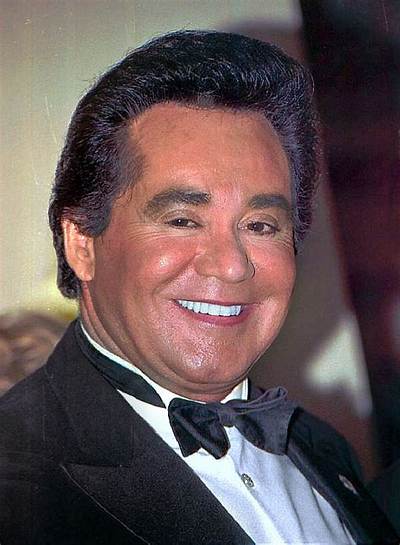
Carl G. Jones is one of the most popular and richest Biologist who was born on June 20, 1954 in Carmarthen, Wales, United Kingdom.
Carl G. Jones, MBE (born 20 June 1954) is a Welsh conservation biologist, who has been employed by Durrell Wildlife Conservation Trust since 1985, and a founding member (1984) and current scientific director of Mauritian Wildlife Foundation (MWF). Additionally he is Chief Scientist at Durrell Wildlife Conservation Trust, and an honorary professor in ecology and conservation biology at the University of East Anglia. Often outspoken on the importance of knowing your species and using intuition, empathy and practical knowledge over dogmatic education, Jones is best known for his work in recovering the Mauritius kestrel (Falco punctatus) from just four individuals in 1974, to an estimated 400. Working in the Mascarene Islands since 1979, Jones has led five successful bird restoration projects where the starting population has numbered less than 12 individuals; as a consequence Mauritius has averted more bird extinctions than any other country. Jones has pioneered the use of ecological or taxon replacements to fill the ecological roles of extinct animals and successfully restored levels of endemic vegetation to previously denuded islets. Jones’ work has been highlighted in Douglas Adams and Mark Carwardine’s 1990 radio documentary Last Chance to See, along with its accompanying book, as well as David Quammen’s 1996 book The Song of the Dodo: Island Biogeography in an Age of Extinctions.
A follower, since childhood, of the work of Gerald Durrell, he first visited the Jersey Zoo in 1967. When he went to Mauritius in 1979 he worked closely with the Jersey Wildlife Preservation Trust (now Durrell Wildlife Conservation Trust) and came into their employ in 1985, and continues to oversee the Trust’s efforts in the Mascarenes. He is their Chief Scientist and a “thought leader” influencing many aspects of the Trust’s work in both Jersey and elsewhere. He regularly lectures and teaches conservation theory, case studies and practical skills to students at Durrell Conservation Academy (formerly the International Training Centre), where his classes are prized for their humorous delivery and demonstrable field knowledge.