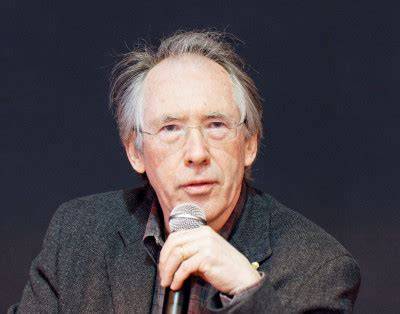
Frank Bisignano is one of the most popular and richest Businessperson who was born on August 9, 1959 in Brooklyn, New York, United States. Frank J. Bisignano was born on the 9th of August 1959 in the Borough in Brooklyn, New York. Bisignano and his younger sister Elvira was raised by his grandparents Albert H. Bisignano and Anna Rutigliano Bisignano in the Brooklyn neighborhood of Mill Basin. Bisignano’s grandparents came of Southern Italy, and his father, also from Brooklyn was an US Customs Officer at Port Newark for 45 years. Bisignano was a student at Baker University in Kansas and obtained a Bachelor’s Degree on finance at Newport University (also known as Janus University).
He was the CEO of Citigroup’s corporate and investment banking unit from 2002 until 2004, in charge of a series of mergers as well as taking over Primerica Financial Services. From 2002 until December 2005, he was the chief executive officer of the firm’s Global Transaction Services division, together with Maria Aspan of American Banker writing later the Bisignano “got his payments industry bona fides at Citi by running its massive global transaction services unit.” In his time as CEO, revenue for the division increased from an annual revenue of $4 billion, to $6 billion and the “bottom line performance” changing from a net losing $400 million to a profit of more than $1 billion. On June 1, 2004 The magazine Treasury and Risk named him as one among the “100 most influential people in finance,” calling him as a “flow master” for “keeping corporate cash moving,” and stating that as chief executive officer of Citigroup Global Transaction Services division, his team “restructured the way the bank deals with its customers to give corporations a single point of contact for all their banking needs.”
Hired as CAO of JPMorgan Chase in 2005, CEO Jamie Dimon “trusted him with integrating the bank’s purchases of a foundering Bear Stearns Cos. and bankrupt Washington Mutual Inc. during the crisis.” Bisignano was also a primary negotiator in JPMorgan’s acquisition of the Canary Wharf property in London, and CEO for several of JPMorgan’s mortgage banking divisions. In 2012 he was promoted to co-COO, and the Financial Times called him “one of [JPMorgan]s most influential, yet least visible, executives.”
For some time the press had reported that Kohlberg Kravis Roberts & Co (KKR), the firm which had purchased First Data in 2007 for $28 billion, was considering selling First Data’s financial services business in an effort to recoup losses. The division consists of First Data’s credit, debit and retail card processing services, and was valued at around $4 to $5 billion. Within one day of Bisignano becoming CEO the sale was announced to be off. Publications such as Bloomberg Businessweek credited the halt to Bisignano, quoting KKR executive Scott Nutall as stating “one of the first things Frank said to me was, ’Don’t sell it! I think I can fix it.” Bisignano announced that there were “synergies” between First Data’s divisions, and instead of breaking up the company he was considering options such as a partial public offering and boosting profits.
In 1994, he was employed at the financial service company Smith Barney, where he was involved in a variety of acquisitions that resulted in the establishment of Citigroup. In his role at Citigroup at the end of the year, he was “responsible for the management of operations, technology and general services activities on a worldwide basis for the Corporate Investment Bank.” In Citigroup it was also an active member of the Management Committee. His first position in leadership was that of chief executive officer of their Global Corporate and Investment Banking Group (GCIB) as well as was also the position of Chief of Operation and Technology of the whole firm from 2000 until 2003. He was the deputy for the 9/11 attacks and also managed the continuity plan for more than 16,000 JPMorgan Chase employees displaced by the destruction of the World Trade Center.