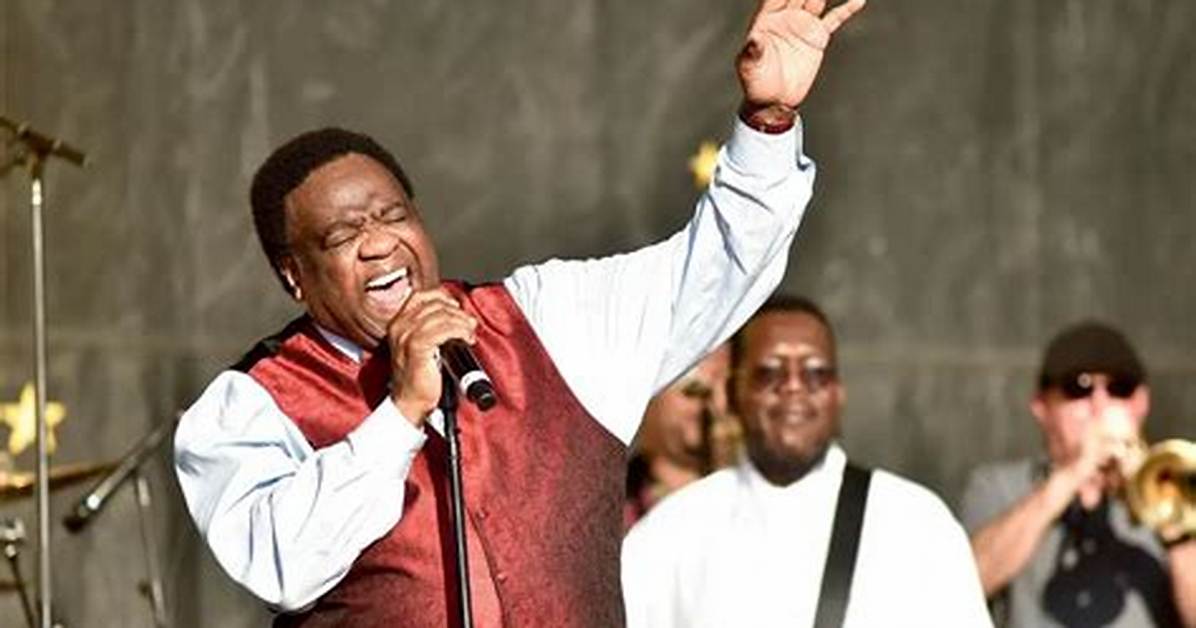
Al Green is one of the most popular and richest Basketball Player who was born on September 3, 1953 in The Bronx, The Bronx, United States. Al Green (born 3 September 1953) is a retired American-Australian professional basketball player who played his career in the Australian National Basketball League from 1981 until his retirement in at the end of 1993. Green obtained Australian citizenship in 1984.
During his career, Green was often accused by the media of not being able to handle the pressure of big games such as Grand Finals, mostly stemming from sub-par performances (by his standards) in the 1982 and 1985 Grand Finals where he scored 11 and 15 points respectively compared to his season averages of 26.5 and 31.0. Green’s answer to those who claimed he couldn’t play big games was that “At least I got there and won two championships”.
Al Green wasn’t only a professional basketball player. He was also a professional runner who won Adelaide’s famous Bay Sheffied sprint race held over 120 metres in both 1983 and 1984. Starting off a 4.75 mark and running the equivalent of 6 yards (5 m) inside even time, Green won the 1983 Bay Sheffied in a time of 12.0 seconds and by a margin of approximately 3 metres. Earlier in the year Green had finished 2nd in Australia’s oldest and richest short distance running race, the Stawell Gift. Starting off a 2.0 mark in 1984, Green won his second Bay Sheffield in a time of 12.67 seconds, becoming the first man in 80 years to win back to back Bay Sheffield’s (H. Smith won in 1902 and 1903). He also became only the third man after G. Clarkson (1890–91) and Smith to win back to back.
Note: The Three-point line was only introduced to the NBL in 1984.
After failing to gain a contract with Phoenix, Green, a 6’2″ (189 cm) guard, reasoned that if he didn’t want to play football, there must be somewhere in the world he could play basketball. This led him in 1981 first to the Philippines for the Crispa Redmanizers, and later to Adelaide in South Australia and the West Adelaide Bearcats who played at the 3,000-seat Apollo Stadium. The Bearcats played in the fledgeling National Basketball League, which in 1981 was then heading into just its third season after starting in 1979. For Green, Australia was a perfect choice as not only was there no language barrier and the Australian lifestyle, which during the 1980s was being influenced more and more by the USA, was similar to what he was used to. Green, who could run faster, jump higher, and dunk the ball better than just about anyone else at the time in the fledgling league, was an instant star in Australia and in his first season he helped the Bearcats to a third-place finish and was selected to his first All NBL First Team.